

Kutupalong Refugee Camp
Photograph
Image
Video
Audio
 Activities
LOOK
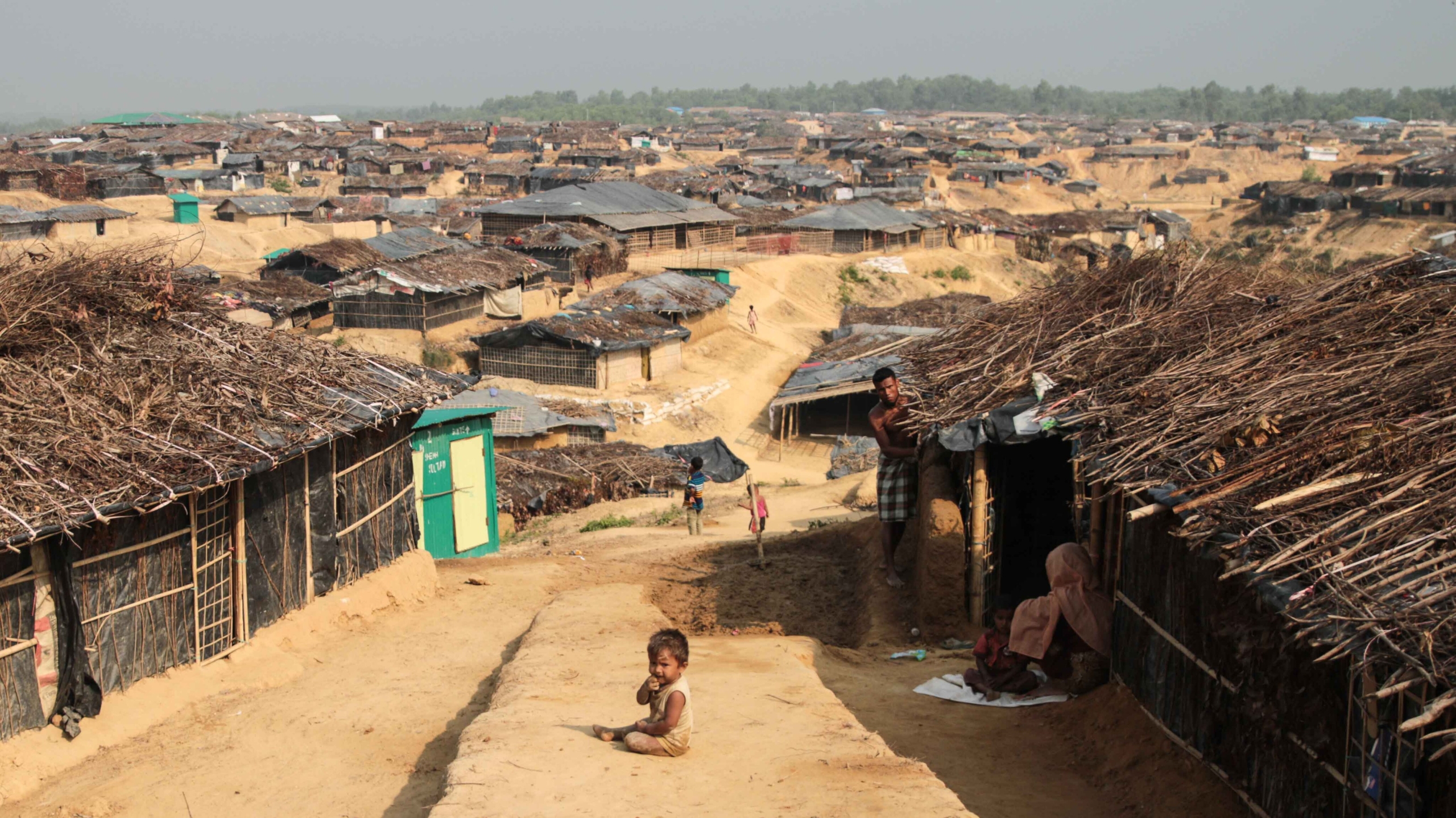
Estimate the number of huts you can see in this picture. Assuming that about 10 people might live in each hut, how many people do you think are represented in this image alone? Imagine the organization and resources needed to guarantee all of them food, shelter and safety.
THINK
Consider what it means to be stateless, and how this affects basic human rights and safety. How might living in a refugee camp affect children and families long term?
DO
Go online and search for the four largest refugee camps in the world, and add up their populations. Compare this total number of refugees to the population of your town or city.
Details
 Date March 24, 2017
 Materials
 - Photograph
Historical Context
Choose one of the three levels below to match your needs.
- This photograph shows a camp in Bangladesh for Rohingya refugees.
- With close to 1 million people, it is one of the largest refugee camps in the world.
- When there is extensive oppression and displacement of minorities, women and children are the most likely to become refugees.
- A background in the discrimination and oppression of the minority Rohingya in Myanmar is useful when considering this photograph.
This photograph shows a camp in Bangladesh for Rohingya refugees.
This camp is one of the world’s largest, having close to 1 million Rohingya refugees in 2017. Rohingya Muslims were fleeing persecution in nearby Myanmar. The government’s harsh repression of the minority Rohingya forced people to choose between known violence and a precarious journey into an uncertain future.
The photograph provides perspective on who bears the brunt of persecution such as this. Women and children make up the majority of refugees in the camp.
This photograph shows a camp in Bangladesh for Rohingya refugees.
In late August 2017, hundreds of thousands of Rohingya fled their homes in Myanmar, escaping violence perpetrated by the state’s army and citizens. Many walked for days, or travelled by sea to Cox’s Bazar in Bangladesh, where more than 900,000 Rohingya have found safety in one of the world’s largest refugee camps. More than half of them are women and children.
The Rohingya are a Muslim ethnic minority in Myanmar, which is a predominately Buddhist country. Despite living in the country for generations, they have been denied citizenship, making them one of the world’s largest stateless populations.
Without citizenship, they have been denied basic rights and protection, making them extremely vulnerable to state-sanctioned violence.
- This photograph shows a camp in Bangladesh for Rohingya refugees.
- With close to 1 million people, it is one of the largest refugee camps in the world.
- When there is extensive oppression and displacement of minorities, women and children are the most likely to become refugees.
- A background in the discrimination and oppression of the minority Rohingya in Myanmar is useful when considering this photograph.
This photograph shows a camp in Bangladesh for Rohingya refugees.
This camp is one of the world’s largest, having close to 1 million Rohingya refugees in 2017. Rohingya Muslims were fleeing persecution in nearby Myanmar. The government’s harsh repression of the minority Rohingya forced people to choose between known violence and a precarious journey into an uncertain future.
The photograph provides perspective on who bears the brunt of persecution such as this. Women and children make up the majority of refugees in the camp.
This photograph shows a camp in Bangladesh for Rohingya refugees.
In late August 2017, hundreds of thousands of Rohingya fled their homes in Myanmar, escaping violence perpetrated by the state’s army and citizens. Many walked for days, or travelled by sea to Cox’s Bazar in Bangladesh, where more than 900,000 Rohingya have found safety in one of the world’s largest refugee camps. More than half of them are women and children.
The Rohingya are a Muslim ethnic minority in Myanmar, which is a predominately Buddhist country. Despite living in the country for generations, they have been denied citizenship, making them one of the world’s largest stateless populations.
Without citizenship, they have been denied basic rights and protection, making them extremely vulnerable to state-sanctioned violence.
Summary
- This photograph shows a camp in Bangladesh for Rohingya refugees.
- With close to 1 million people, it is one of the largest refugee camps in the world.
- When there is extensive oppression and displacement of minorities, women and children are the most likely to become refugees.
- A background in the discrimination and oppression of the minority Rohingya in Myanmar is useful when considering this photograph.
Essential
This photograph shows a camp in Bangladesh for Rohingya refugees.
This camp is one of the world’s largest, having close to 1 million Rohingya refugees in 2017. Rohingya Muslims were fleeing persecution in nearby Myanmar. The government’s harsh repression of the minority Rohingya forced people to choose between known violence and a precarious journey into an uncertain future.
The photograph provides perspective on who bears the brunt of persecution such as this. Women and children make up the majority of refugees in the camp.
In-Depth
This photograph shows a camp in Bangladesh for Rohingya refugees.
In late August 2017, hundreds of thousands of Rohingya fled their homes in Myanmar, escaping violence perpetrated by the state’s army and citizens. Many walked for days, or travelled by sea to Cox’s Bazar in Bangladesh, where more than 900,000 Rohingya have found safety in one of the world’s largest refugee camps. More than half of them are women and children.
The Rohingya are a Muslim ethnic minority in Myanmar, which is a predominately Buddhist country. Despite living in the country for generations, they have been denied citizenship, making them one of the world’s largest stateless populations.
Without citizenship, they have been denied basic rights and protection, making them extremely vulnerable to state-sanctioned violence.