

Life Jacket
Artifact
Image
Video
Audio
 Activities
LOOK
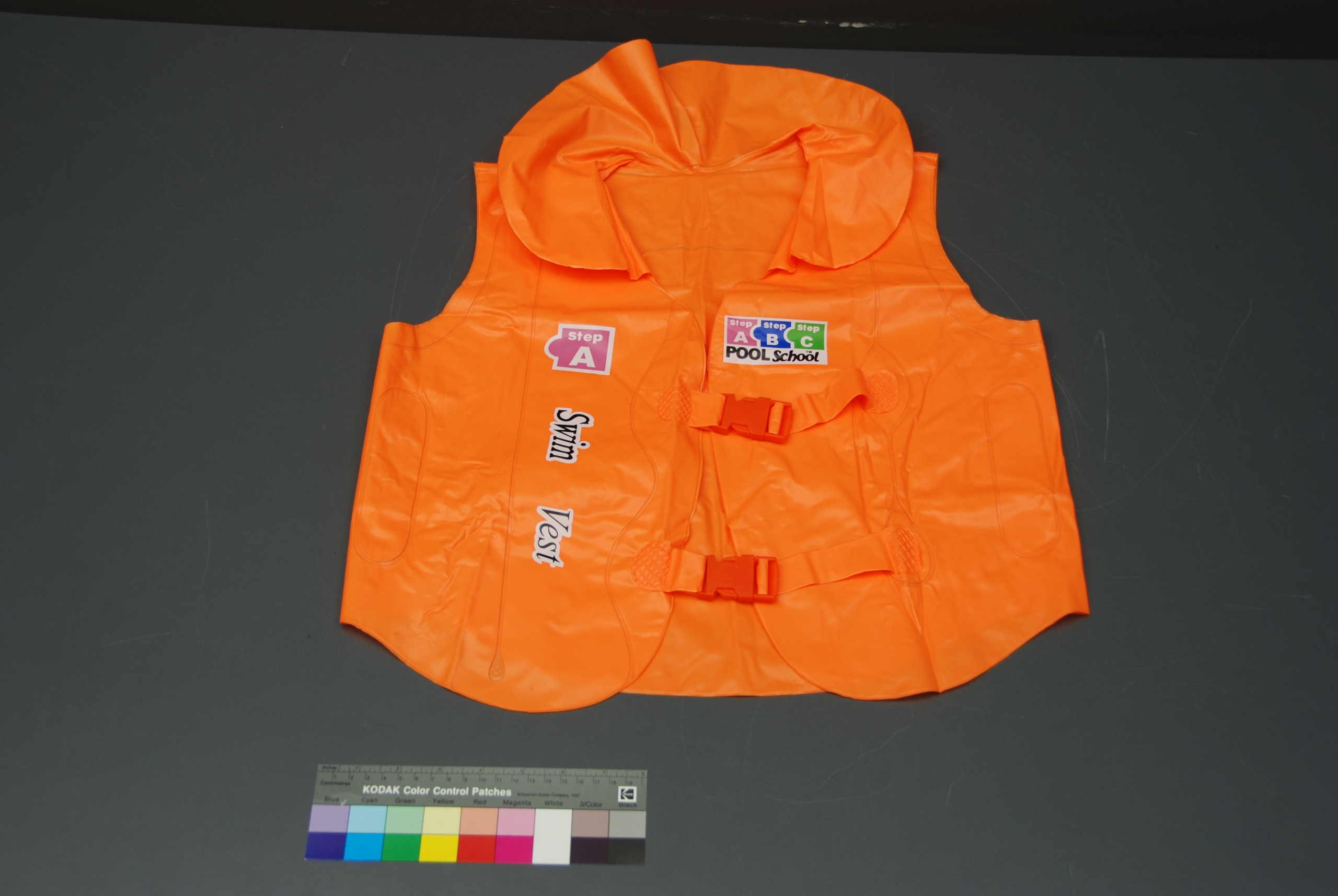
Examine the object’s description and the story behind child-sized life jackets collected during the migrant crisis. What do you notice about the object’s description? Why do you think life jackets were rare on the boats? How does this reflect the challenges faced by migrants?
THINK
What factors make escaping by water dangerous? Why are asylum seekers willing to risk such dangerous conditions to flee their home countries?
DO
Write a short journal entry or fictional letter from the perspective of a child wearing one of these life jackets, describing their journey and rescue experience.
Details
 Date 2015
 Materials
 - Fabric
- Plastic
Historical Context
Choose one of the three levels below to match your needs.
- This inflatable vest, intended for a backyard swimming pool, was provided by smugglers to an unknown child, who was rescued from the Mediterranean Sea in 2015.
- Refugees often have few suitable options when it comes to reaching a safe place. This fragile and unsafe inflatable vest demonstrates the severe danger of inadequate supplies and equipment.
- A background knowledge of various crises, such as the Libyan and Syrian civil wars, is beneficial to understanding why refugees are willing to make such dangerous journeys.
This inflatable vest, intended for a backyard swimming pool, was provided by smugglers to an unknown child, who was rescued from the Mediterranean Sea in 2015.
The fragility of the jacket demonstrates both the desperation of fleeing families, and the limited options for safer routes. Refugees and asylum seekers are willing to make risky crossings, because of wars and conflicts raging in their countries of origin. Legal immigration processes are often limited.
This inflatable vest, intended for a backyard swimming pool, was provided by smugglers to an unknown child, who was rescued from the Mediterranean Sea in 2015.
Some of the most dangerous escapes are made by sea. In rafts, lifeboats, old fishing boats and rusty freighters, refugees face death by drowning, exposure, thirst and sometimes violence. Since 2015, an estimated 23,344 asylum seekers have died or been lost at sea in the Mediterranean.
Because of their desperate situations, many asylum seekers fall prey to human smugglers and traffickers, who charge high prices for passage on boats that are both overcrowded and dangerous.
- This inflatable vest, intended for a backyard swimming pool, was provided by smugglers to an unknown child, who was rescued from the Mediterranean Sea in 2015.
- Refugees often have few suitable options when it comes to reaching a safe place. This fragile and unsafe inflatable vest demonstrates the severe danger of inadequate supplies and equipment.
- A background knowledge of various crises, such as the Libyan and Syrian civil wars, is beneficial to understanding why refugees are willing to make such dangerous journeys.
This inflatable vest, intended for a backyard swimming pool, was provided by smugglers to an unknown child, who was rescued from the Mediterranean Sea in 2015.
The fragility of the jacket demonstrates both the desperation of fleeing families, and the limited options for safer routes. Refugees and asylum seekers are willing to make risky crossings, because of wars and conflicts raging in their countries of origin. Legal immigration processes are often limited.
This inflatable vest, intended for a backyard swimming pool, was provided by smugglers to an unknown child, who was rescued from the Mediterranean Sea in 2015.
Some of the most dangerous escapes are made by sea. In rafts, lifeboats, old fishing boats and rusty freighters, refugees face death by drowning, exposure, thirst and sometimes violence. Since 2015, an estimated 23,344 asylum seekers have died or been lost at sea in the Mediterranean.
Because of their desperate situations, many asylum seekers fall prey to human smugglers and traffickers, who charge high prices for passage on boats that are both overcrowded and dangerous.
Summary
- This inflatable vest, intended for a backyard swimming pool, was provided by smugglers to an unknown child, who was rescued from the Mediterranean Sea in 2015.
- Refugees often have few suitable options when it comes to reaching a safe place. This fragile and unsafe inflatable vest demonstrates the severe danger of inadequate supplies and equipment.
- A background knowledge of various crises, such as the Libyan and Syrian civil wars, is beneficial to understanding why refugees are willing to make such dangerous journeys.
Essential
This inflatable vest, intended for a backyard swimming pool, was provided by smugglers to an unknown child, who was rescued from the Mediterranean Sea in 2015.
The fragility of the jacket demonstrates both the desperation of fleeing families, and the limited options for safer routes. Refugees and asylum seekers are willing to make risky crossings, because of wars and conflicts raging in their countries of origin. Legal immigration processes are often limited.
In-Depth
This inflatable vest, intended for a backyard swimming pool, was provided by smugglers to an unknown child, who was rescued from the Mediterranean Sea in 2015.
Some of the most dangerous escapes are made by sea. In rafts, lifeboats, old fishing boats and rusty freighters, refugees face death by drowning, exposure, thirst and sometimes violence. Since 2015, an estimated 23,344 asylum seekers have died or been lost at sea in the Mediterranean.
Because of their desperate situations, many asylum seekers fall prey to human smugglers and traffickers, who charge high prices for passage on boats that are both overcrowded and dangerous.