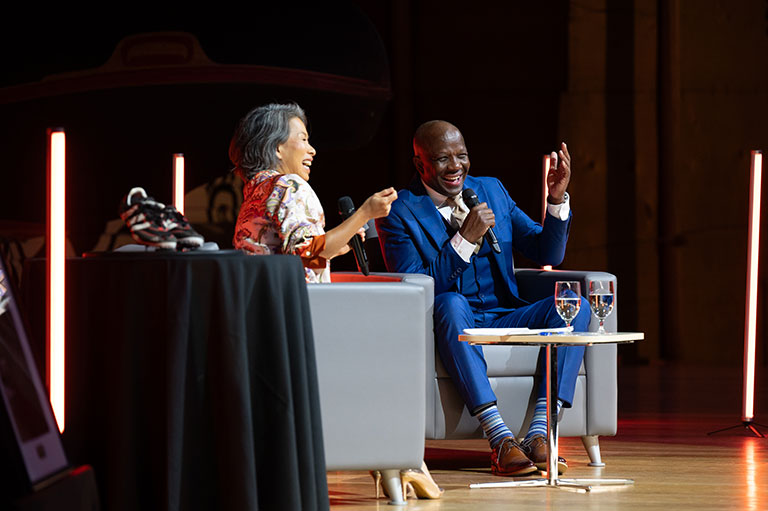
Donovan Bailey and five objects that show change in athletics history

Thirty years ago, on a hot and humid Atlanta summer night, Donovan Bailey made history. He won gold at the 1996 Olympics. He also set a world record, running the 100m men’s final in 9.84 seconds.
Heading into the 1996 Atlantic Games, Bailey was the favourite and the reigning World Champion. But as the final race approached, the pressure was high. Bailey was running in the shadow of the Ben Johnson doping scandal. Before the Games, Bailey talked to the press about the existence of racism in Canada and was misquoted in Sports Illustrated. A media frenzy ratcheted up the already high tension. Bailey stood by his comments then, and since.
And of course, he rose to the challenge that day and won a dramatic victory. A week later, Bailey would anchor the 4x100m men’s relay to gold.
Bailey’s remarkable performance is part of a bigger history of performance, drama and change in Canadian athletics. To celebrate its 30th anniversary, here are five objects from the Canadian Museum of History’s Sport Collection that highlight Bailey’s win and other dramatic landmarks in Canadian athletics history.
Athletics change with the times, whether that means innovations in equipment or in social inclusion and acceptance.
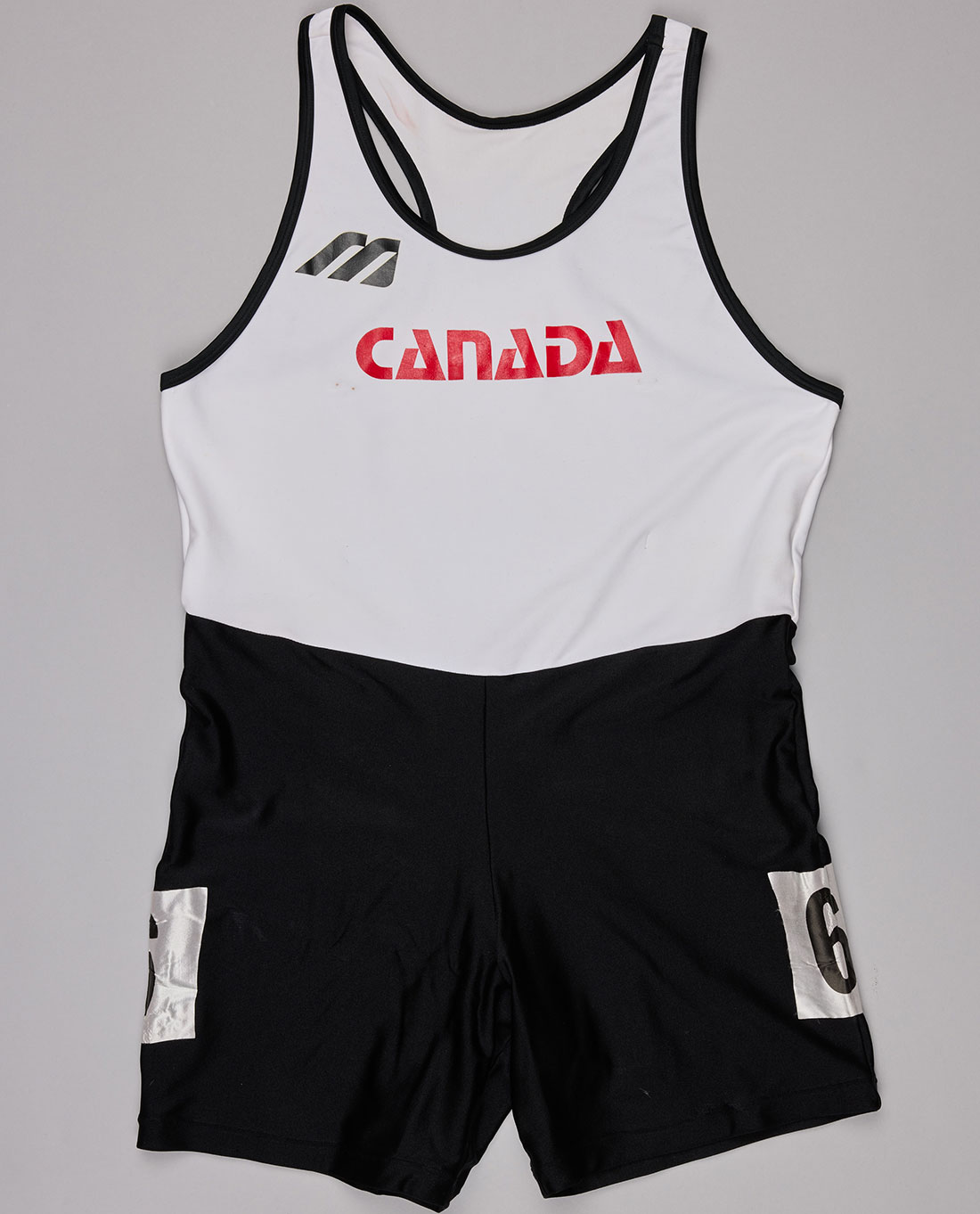
Donovan Bailey wore this singlet in the 1996 men’s 100m final.
CMH, 2024. 69.1
Winning singlet
On the night of the 1996 Atlanta 100m final, eight athletes lined up at the starting blocks. Bailey was in lane six, a prime location. He wore this singlet.
There were not two, but three false starts in the race. Linford Christie, the reigning Olympic champion, was disqualified. After a slow start, Bailey made up time and space. In interviews since, Bailey has said that he knew he had won the race by the 70m point.
Reactions across Canada were euphoric. To this day, many remember where they were when Bailey won.
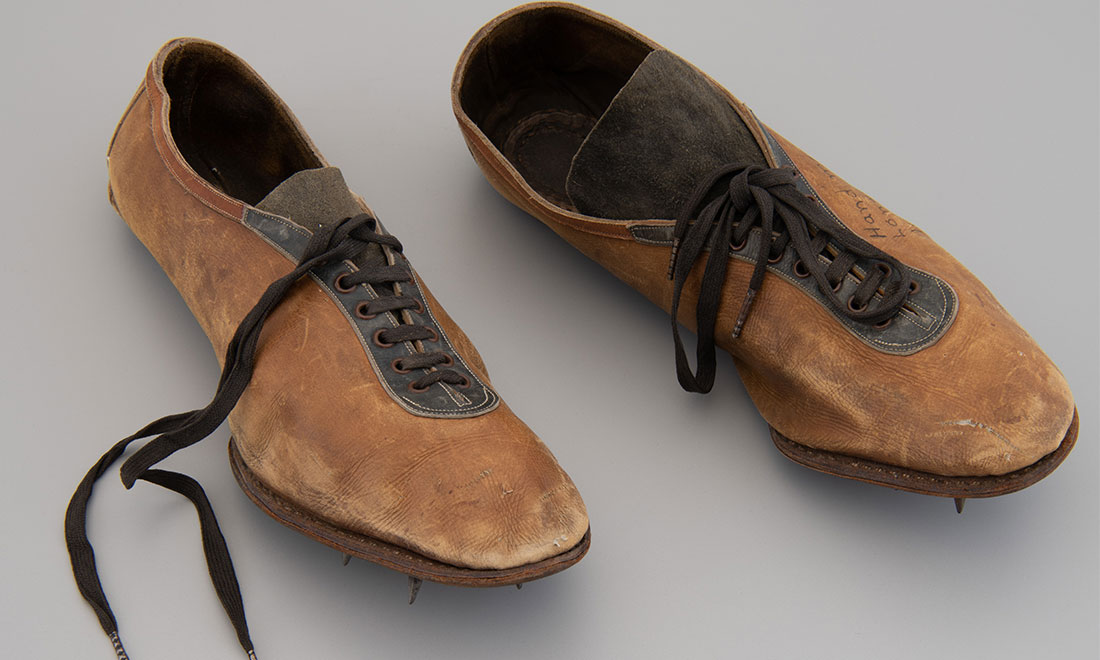
Earl Thomas wore these leather track shoes with spikes at the 1920 Olympics.
CMH 2021.126
Shoe technology
Earl “Tommy” Thomas (1895–1971) wore these leather track shoes when he won gold in the 110m hurdles at the 1920 Antwerp Olympics. His time was 14.8 seconds, which set a world record.
Thomas’s track shoes were handmade for him in London, England. They had what was then a new technology: six heavy-duty spikes placed on the bottom front of the shoe. Spikes helped runners get a grip on the loose gravel mix that track surfaces were made up of at the time.
Thomas’s spikes predate the lightweight, mass-produced shoes that are common today. Over the course of the 20th century, evolving shoe technology would become a multi-billion-dollar industry devoted to helping people run faster.
Expanding the field
Myrtle Cook McGowan (1902–1985) earned an Olympic diploma at the 1928 Amsterdam Games. She was the anchor for the gold medal-winning 4 x 100m women’s relay team.
The year 1928 was the first time women were allowed to compete in athletics at the Olympics. Five events were open to women: 100m dash, 800m, 4 x 100m relay, high jump, and discus throw.
That year also marked the first time Canada sent a women’s team to the Summer Olympics. Cook was one of the six women representing Canada in athletics. She and her teammates — Fanny Rosenfeld, Jean Thompson, Florence Jane Bell, Ethel Smith, and Ethel Catherwood — were dubbed the “Matchless Six.” A seventh athlete, Margaret Lambert, represented Canada in swimming.
These women were celebrated as heroes when they returned from the Olympics. More than 200,000 people greeted them at Toronto’s Union Station. Sport has long been a gateway for girls and women to gain more space and recognition in Canadian society.
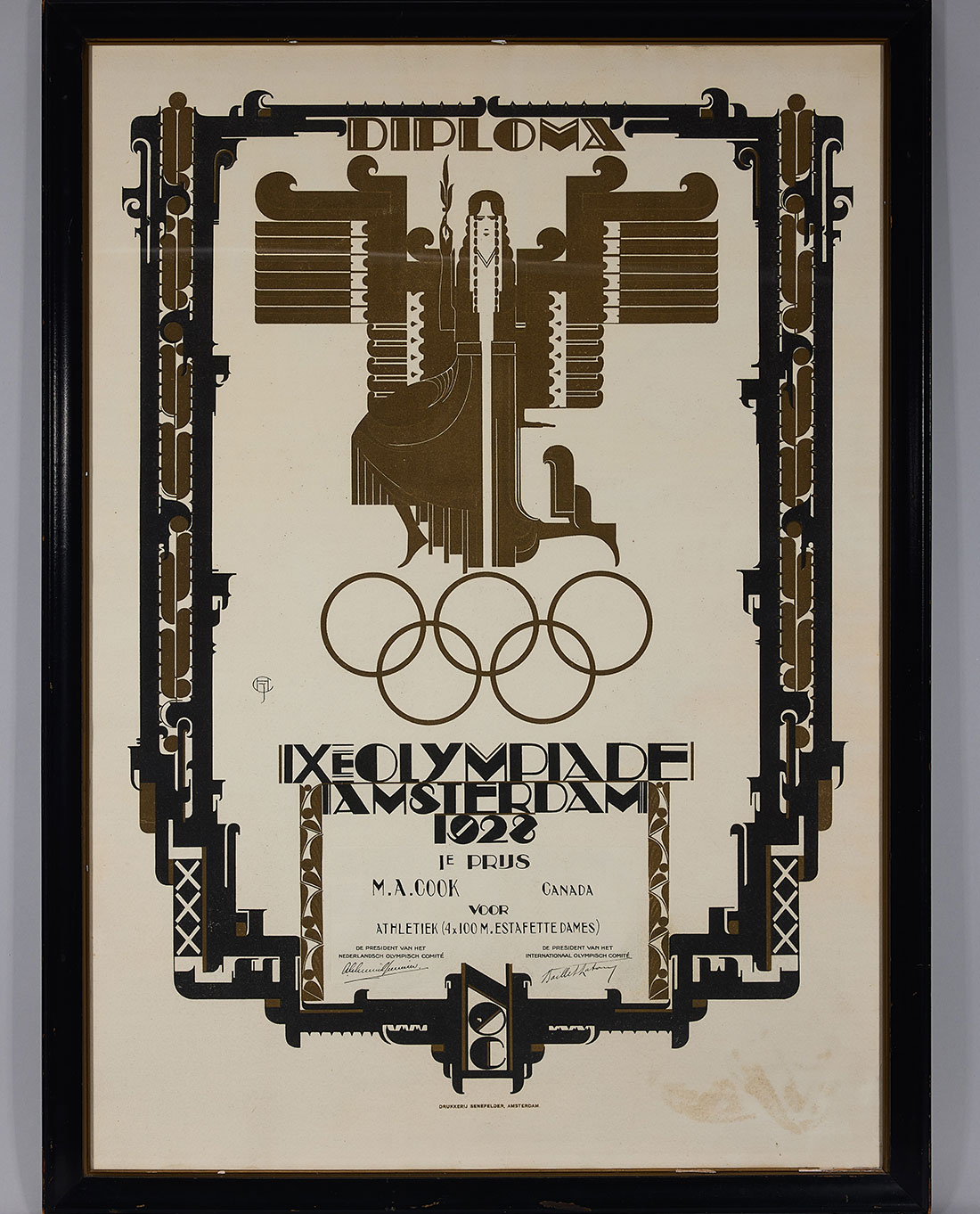
Myrtle Cook’s diploma from the 1928 Olympics.
CMH 2021.126
The agony of defeat
If we can celebrate the triumph of a win, then we can remember moments of disappointment.
Perdita Felicien had a very human experience on a very big stage at the 2004 Athens Olympics. She was the gold-medal favourite in the women’s 100m hurdles. But she caught her foot going over the first hurdle in the final and fell. She was disqualified from the race.
The Museum of History interviewed Felicien for Shaping Canada, an oral history project you can learn more about here. She described the challenge of being known as “The girl who failed.” But as the two-time Olympian, 10-time national champion, and the first Canadian woman to win a gold medal at a World Championship points out, she’s also “The girl who got up.”
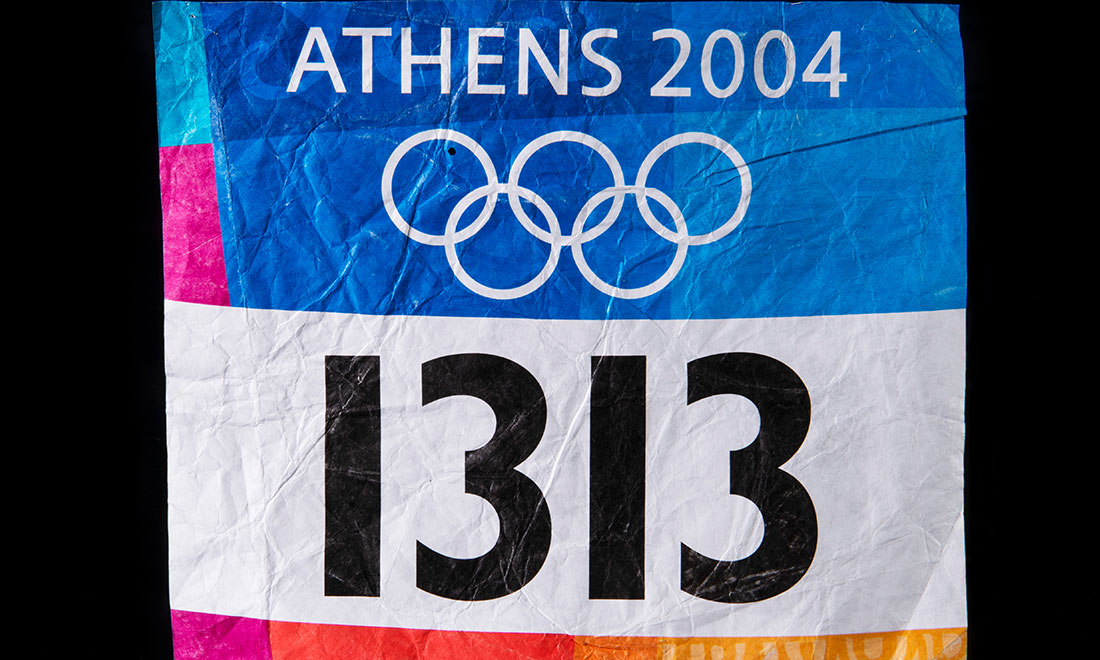
Perdita Felicien’s race bib from the 2000 Olympics was 1313.
Photo of race bib CMH 2021.37.2
Wheels on the track
Brent Lakatos wore wheelchair-racing gloves like these while earning 13 Paralympic medals, including golds at London 2012, Rio 2016, and Paris 2024.
International para events use a classification system to group athletes based on different levels of capacity for fair competition. Lakatos competes in a range of events including the T53 100m, 400m, and 1500m events, as well as the T54 5000m.
In interviews, Lakatos credits his success to not being afraid to take risks and experiment with new techniques and equipment. This mentality reflects a much longer tradition that runs through athletics history: In order to break records and elevate performance, athletes must get creative and work hard.
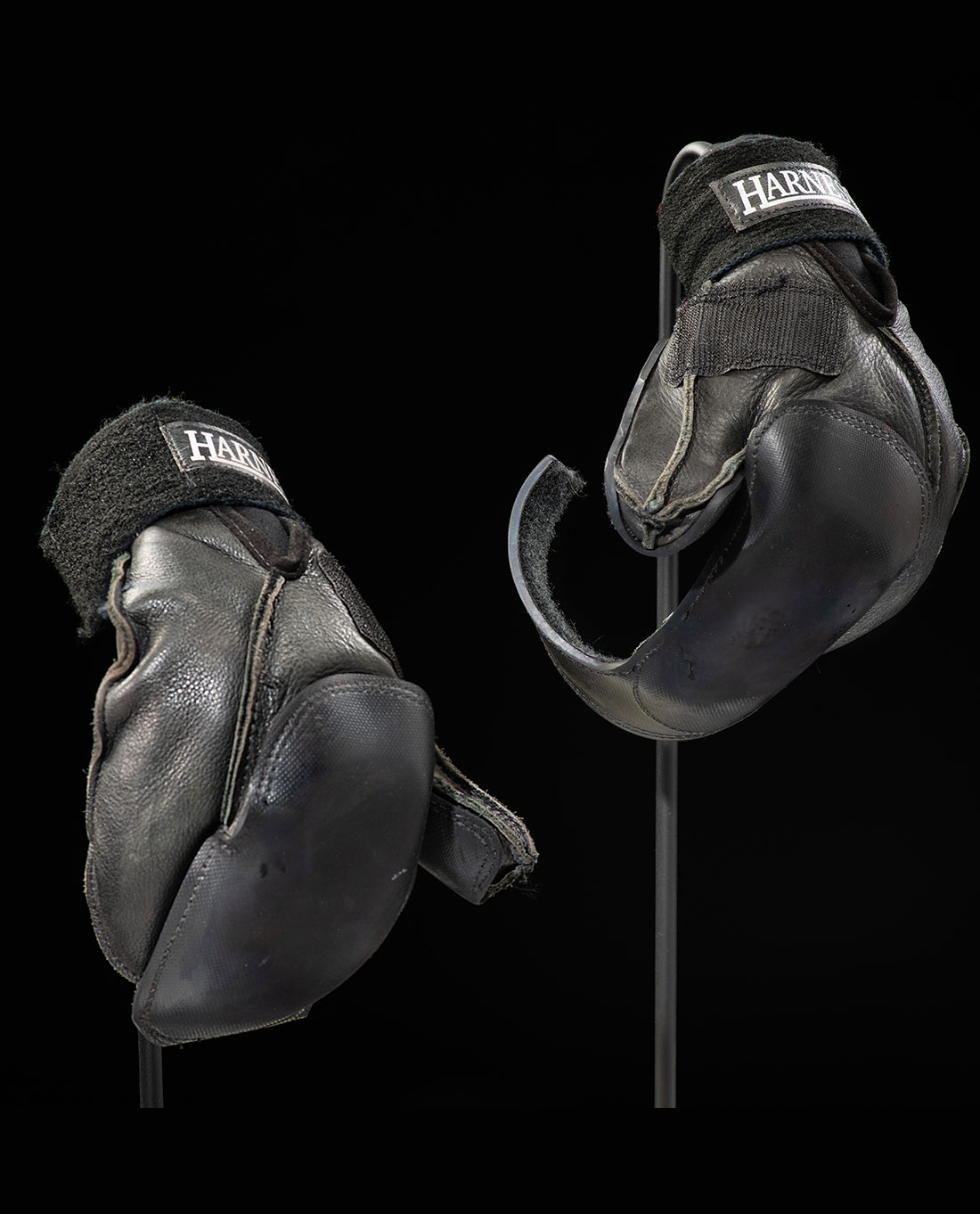
Brent Lakatos’s wheelchair-racing gloves
CMH 2021.126.2847 a-b
Conclusion
Bailey’s gold-winning 1996 performance goes down as one of the best moments in Canadian sports history. It joins other memorable moments from athletics history and the ongoing quest for Citius, Altius, Fortius (faster, higher, stronger).
Related articles

National sport, national identity: the changing role of hockey in Canada