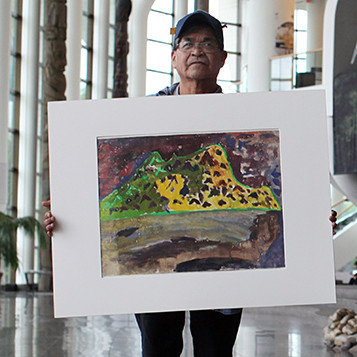
We invite you to engage in prepared learning resources rooted in truth and reconciliation principles, and what it means to be a witness in understanding the ongoing legacy of the Indian Residential School System and its function in Canada.
These resources are designed to support learning at all levels in what it means to be a witness, and to amplify First Nations, Inuit, and Métis truths and stories on this important day, and year-round.
Please ensure that self-care is practiced throughout this learning experience. Discussions about residential schools can be difficult and emotional, so take time to pause, reflect, and seek support when needed.
Survivors and those affected by the Indian Residential School System can also access the Hope for Wellness line (1-855-242-3310), which provides culturally appropriate support and crisis intervention.
Videos
Co-produced in partnership with the National Centre for Truth and Reconciliation.
I am a Survivor: David Decontie
Taken from his family at a young age, David Decontie — a Survivor of St. Mary’s Residential School in Kenora, and Pointe Bleue Residential School in Quebec — shares the profound impact of the residential school system on his life, identity and family.
Reflecting courage, cultural reclamation, therapy, and the love of his children and grandchildren, David’s story is one of resilience, healing and survival, and an inspiring testament to the strength of Survivors and the importance of truth, remembrance and reconciliation.
I Am a Survivor: David Decontie
Reflecting courage, cultural reclamation, therapy, and the love of his children and grandchildren, David’s story is one of resilience, healing, and survival.
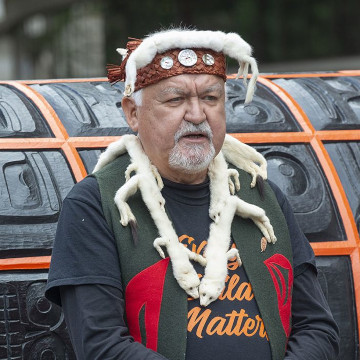
Stanley C. Hunt: Carving Truth Into Memory
Master Kwakwaka’wakw (Kwakiutl) artist Stanley C. Hunt reflects on a lifetime dedicated to traditional art, cultural teachings, and truth-telling. Inspired by the revelations of unmarked graves at former residential schools, Hunt created the Indian Residential School Memorial Monument to honour the children who never came home — ensuring that their stories are remembered and their voices continue to be heard.
Through art, witnessing and reconciliation, this powerful work stands as a lasting tribute to healing, remembrance, and our shared responsibility to ensure that history does not repeat itself.
Stanley C. Hunt: Carving Truth Into Memory
Master Kwakwaka’wakw (Kwakiutl) artist Stanley C. Hunt reflects on a lifetime dedicated to traditional art, cultural teachings, and truth-telling.
Self-led learning activity
Discussing Stanley C. Hunt’s Indian Residential School Memorial Monument
A visual thinking strategy and engagement activity based on Stanley C. Hunt’s monument and the video titled Stanley C. Hunt: Carving Truth Into Memory, co-produced with the National Centre for Truth and Reconciliation. This activity can be conducted in the classroom or independently.
School program
Survivor Truths – Residential Schools, Art, and Reconciliation
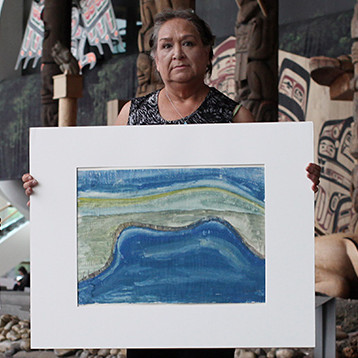
Students in this program will participate in a series of guided activities focusing on the powerful role of land in this history and in truth and reconciliation efforts. This program was developed in partnership with Carey Newman (Hayalthkin’geme), a Kwakwakaʼwakw/Salish artist, master carver, filmmaker, and intergenerational Survivor, as well as a group of Survivors from the Alberni Indian Residential School on Vancouver Island. It uses art created by these Survivors when they were students at the school in the 1950s and early 1960s, and reflections on their experiences attending residential schools. In listening to their stories, we hope witnesses can understand the role of colonialism and one’s own place in truth-sharing and reconciliation in Canada.
Ontario – Grades 7 to 12 (Only groups in these grades are eligible.)
Quebec – Secondary 1 to 5 (Only groups in these grades are eligible.)
Program can be adjusted to accommodate an adult audience.
Educational resource
Survivor Truths: The Art of Reconciliation
This Teacher Zone package presents paintings created by Indigenous children at the Alberni Indian Residential School in the 1950s and 1960s, then preserved by their art teacher, Robert Aller. After they were donated to the University of Victoria in 2008, specialists recognized their importance and worked to find the artists.
In 2013, several works were returned to Survivors through a ceremony supported by the Truth and Reconciliation Commission of Canada. Some Survivors chose to share the paintings publicly to raise awareness of residential school history. The Canadian Museum of History collaborated with them to record their memories and testimonies. Together, the artworks and oral histories highlight enduring connections to land, family and culture, despite the destructive aims and lasting impacts of the residential school system.